
Accounts payable guide for small businesses
Published on: 23rd October 2026
Accounts payable is the money your business owes suppliers for goods or services you’ve bought on credit, where you haven’t yet paid the invoices. Accounts payable sits on the balance sheet as a current liability. In UK accounts, you may also see it referred to as ‘trade creditors’.
Let’s dig a little deeper into how accounts payable works and the different ways it impacts the financial health and position of your business.
What does accounts payable mean?
Accounts payable manages the payments you owe to your suppliers and key vendors. The job of your accounts payable function is to ensure these supplier bills are verified, paid accurately and settled on time. This maintains your cashflow and the relationships with your vendors.
Accounts payable vs accounts receivable
Accounts payable is often seen as the flipside to accounts receivable. Accounts receivable deals with incoming money from customers, whereas accounts payable deals with the outgoing money you owe to your suppliers.
To fully understand your finances (and especially your cash-flow position), it’s important to understand both your accounts payable and accounts receivable position.
What are trade creditors and the purchase ledger?
Trade creditors are the suppliers and vendors your business owes money to for goods or services you’ve bought on trade credit.
The purchase ledger is the sub-ledger that tracks these balances. It records every supplier invoice, credit note and payment so you know precisely who you owe and when payment is due – vital for achieving positive cash flow.
Where does the accounts payable balance sit in your accounts?
Your accounts payable is a current liability on the company’s balance sheet. In other words, it’s classed as money the business owes to its creditors.
On the balance sheet, accounts payable is listed as a current liability because it reflects the short-term debts you have for goods and services you’ve received but haven’t paid for.
It sits alongside other short-term obligations like unpaid taxes or accrued expenses. This liability directly offsets your current assets to show the net working capital that’s available to run the day-to-day operations of the business.
The accounts payable cycle
To understand the importance of the accounts payable cycle, we’ve outlined eight of the key steps in this process and how they help you review, check and pay for goods and services.
Let’s kick off by ordering some goods/services from one of your suppliers:
Order goods or services: Raise a purchase order (PO) that outlines the items, agreed prices and terms before placing the order with your supplier. This sets a clear commercial record of what you agreed to buy.
Receive goods or services: Inspect the delivery or review the completed service to confirm everything matches what you requested and is in good condition. Keep the delivery note or job sheet as proof of receipt.
Receive invoice from supplier: Log the incoming invoice as soon as it arrives, noting the payment due date, invoice number and payment terms. Terms will usually vary from 14 to 60, or even 90 days, depending on your agreed credit terms.
Check invoice from supplier (three-way matching): Perform a three-way match by cross-referencing the supplier invoice against your original PO and the delivery note. Verify that the quantities, unit prices, VAT and totals are all accurate.
Approve the payment to the supplier: Route the checked invoice to the business owner or designated manager for approval of the payment. This step prevents any unauthorised spending and double payments.
Record the transaction in your accounting system: Enter the bill into the purchase ledger in your accounting software (e.g., Xero, QuickBooks or Sage), coding it to the correct expense account and claiming any eligible VAT.
Pay the supplier: Schedule and execute the payment using your preferred payment channel – typically via Bacs, your corporate credit card or a payment gateway like Faster Payments or PayPal. Make sure you pay on, or slightly before, the due date.
Reconcile the payment with the invoice: Match the outgoing bank transaction against the open bill in your accounting software. This updates the purchase ledger to show a zero balance for that invoice – in other words, that it’s been paid and reconciled.
How accounts payable impacts your bookkeeping
Let’s quickly look at how you’d account for a supplier invoice in your accounting software.
When you enter a £100 (plus £20 VAT) supplier invoice into cloud accounting software:
Expenses increase by £100
Accounts payable increases by £120
Input VAT increases by £20.
When paid, accounts payable and bank balances both decrease by £120, automatically tracking recoverable VAT for your return.
Make sure you’re registered for VAT if your turnover meets the current threshold. And check with your accountant whether you can reclaim any relevant VAT expenses.
Accounts payable systems, automation and procure-to-pay
Accounts payable (AP) software systems help you track and manage the AP process, from start to finish. They will typically sync with your cloud accounting software, or your accounting solution will include a bill management system to manage the AP process internally.
Your AP software will generally:
Capture incoming invoices from suppliers: Optical Character Recognition (OCR) technology extracts the key information from incoming supplier invoices, including details such as vendor name, invoice amounts, line items and VAT. This is an automated process that eliminates slow manual data entry and the possibility of human error.
Route approvals to relevant managers: Digital invoices are then automatically routed to your designated managers/approvers. This routing will be based on approval limits, department or spending thresholds, and helps to eliminate the email back-and-forth and delays that can happen when the process is carried out manually.
Schedule payments to meet payment deadlines: The software will track the payment due dates of all incoming invoices, allowing the system to schedule electronic supplier payments (like Bacs or Faster Payments) in batches. This helps you avoid late payment fees, make the most of any early-payment discounts and optimise the company’s cash flow.
Sync balances with cloud accounting software: Two-way integration instantly posts approved bills and settled payments to platforms like Xero or QuickBooks, keeping your purchase ledgers, bank balances,and financial reporting totally up to date.
What does ‘procure-to-pay’ mean?
Procure-to-pay (P2P) in accounts payable software refers to the fully integrated, end-to-end digital workflow that manages the entire lifecycle of a purchase.
P2P solutions cover everything from the initial request for goods or services all the way through to final supplier payment and bank reconciliation. Instead of treating purchasing and paying as separate, manual tasks, P2P software connects every stage into a single automated pipeline.
Key ways to stay in control of your payables
Good management of the company’s accounts payable is central to your financial health.
To keep on top of your payables, make sure you:
- Agree clear payment terms: Talk to your suppliers about trade credit terms (like 30 or 60 days). Having this agreed credit helps you pay later, preserve your cash flow and maximise your working capital before invoices become due for payment.
- Track invoice due dates: Log and monitor incoming bill deadlines continuously using your AP software or accounting software. Doing this helps you avoid any missed payments, prevents late fees and makes the most of any early-payment discounts.
- Reconcile regularly: Match payments and supplier invoices frequently to keep your purchase ledger accurate. This helps reduce errors, like duplicate payments, and gives you the best real-time accounting data for producing reliable cash-flow forecasts.
- Know the current UK late payment rules: Under UK law, businesses can charge statutory interest (8% plus the Bank of England base rate) plus compensation fees on late payments for overdue commercial invoices.
When paying suppliers puts pressure on cash flow
As a trading business, you’re in a constant process of balancing your outgoing expenses against your incoming payments. This balancing of cash outflows and cash inflows is what drives the health of your cash flow – and managing your payables is a key part of the process.
When there’s a large gap between paying a supplier and your customers paying you, this creates a hole in your cash flow – and that can directly impact your financial health.
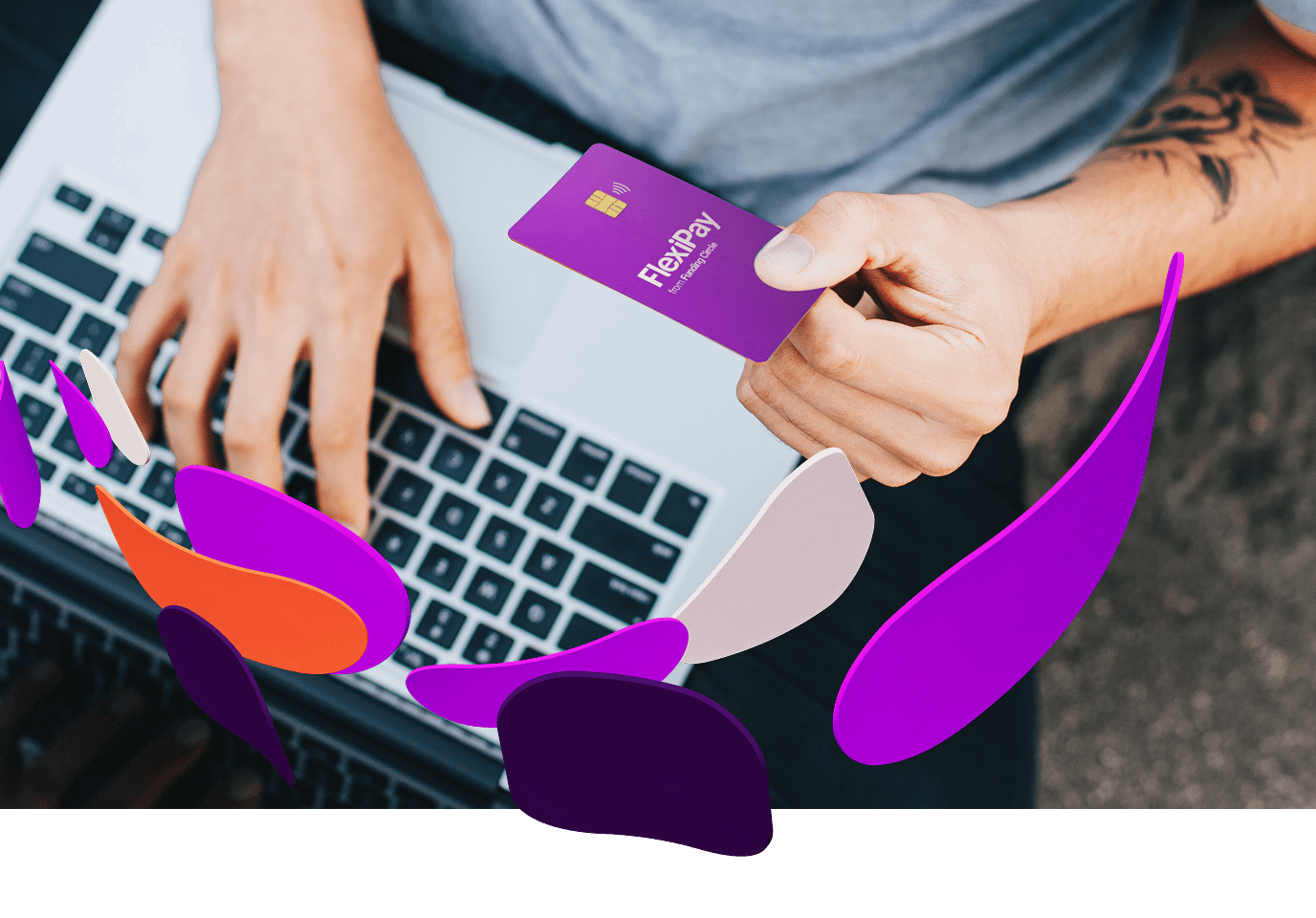
One way to bridge this cash-flow gap is to make use of an agreed line of credit. A flexible line of credit, like Funding Circle’s Flexipay, helps you pay your supplier invoices by card or transfer and then repay the balance over 1, 3, 6, 9 or 12 months.
Short-term loans, working capital loans and business credit cards, like the Funding Circle Cashback card, are other helpful debt finance solutions to consider. By working with a lender, you can borrow additional capital to plug the cash-flow holes.
How Funding Circle helps you manage cash flow and accounts payable
At Funding Circle, we believe that fast, seamless access to extra capital is a core way to keep your payables, cash flow and working capital under control.
If you need to bridge a cash-flow gap, we offer:
Flexipay, a highly flexible line of credit to cover your supplier expenses
Short-term loans, a way to bring extra capital into the business for short periods
Cashback card, a business credit card for managing ad-hoc expenses
Working capital loans, a key way to boost your working capital and fill any gaps.
Who’s eligible for funding with Funding Circle?
To apply for funding with Funding Circle, you’ll need to:
Be a UK-based limited company or LLP
Have a trading history of 12 months or more
Meet the turnover requirements for your chosen product.
Funding Circle: your bridge to better finance
If covering your supplier costs is becoming a challenge and you need a speedy cash injection, our Flexipay line of credit is the ideal way to cover these payables.
Make use of up to £250,000 in credit, with 0% interest and repay the balance over 1 to 12 months for a fee of 1.99% per transaction. It’s the straightforward way to extend your capital and fill those cash gaps.
As with any kind of business finance, it’s good practice to speak to your accountant and legal advisers before entering into any kind of credit agreement.
Accounts payable FAQs
What is accounts payable, in simple terms?
Accounts payable is a current liability that sits on your company’s balance sheet. In short, it’s the cost of the goods or services you’ve ordered from suppliers but have not yet paid for.
Is accounts payable an asset or a liability?
Accounts payable is a liability on the balance sheet. In other words, it’s a debt that the company owes to its suppliers.
What is the accounts payable cycle?
The accounts payable cycle is the step-by-step process of ordering goods/services from a supplier, receiving the invoice, checking the details, paying the supplier and reconciling the invoice with the payment in your accounting system.
What is the difference between accounts payable and accounts receivable?
Accounts payable refers to money going out of the business to pay your suppliers. Accounts receivable refers to money coming into the business from your paying customers.
How can I automate accounts payable?
The accounts payable (AP) process can be automated using AP software solutions and integrations with the company’s cloud accounting software. Some solutions offer an end-to-end, procure-to-payment (P2P) to automate the entire accounting and approval process.
Disclaimer
23/10/26 - While we want to help as much as we can, the information found here is provided solely for informational purposes and should not be considered financial or legal advice. To the extent permitted by law, Funding Circle does not accept any liability for any loss or damage which may arise directly or indirectly from the use of, or reliance on, the information contained here. If you have any questions, please speak to your professional adviser or seek independent legal advice.
Learn more about our business loans and business credit card products
