
Business overdraft alternatives: how to choose the right flexible funding
Published on: 31st October 2026
Business overdrafts are one of the most common forms of business credit. Data from Q2 2026 found that UK SMEs are using 51.4% of their overdraft limits: the highest usage since March 2020. But while overdrafts are a convenient source of finance, bundled with business bank accounts, they’re not always the best option.
Businesses today can also choose from flexible credit lines, business credit cards, revolving credit facilities, short-term business loans, invoice finance and merchant cash advances to get the cash they need. Each can cover cash flow gaps in a different way. The right choice depends on what you need the money for, how long you'll take to repay it and whether you value flexibility or predictable costs.
This guide explains why businesses look beyond overdrafts, compares the main alternatives and helps you work out which might suit your cash flow.
How a business overdraft works
A business overdraft lets your account balance go below zero, up to an agreed limit. It's linked to your business current account, so it kicks in automatically when your balance runs out. You usually pay interest only on the amount you're overdrawn, for the days you're overdrawn, and some banks charge arrangement or renewal fees.
Overdrafts are popular. Alongside credit cards, they're among the most widely used forms of finance for small businesses, according to the British Business Bank. They work well as a buffer for short, unexpected dips in cash flow. Our guide to business overdrafts vs business credit cards explains how they work in more detail.
Why businesses look for alternatives to an overdraft
There are a few common reasons businesses look elsewhere:
The limit isn't enough. Overdraft limits are often modest compared with what a growing business needs.
It can be reduced or withdrawn. Banks review overdrafts regularly and can usually change or remove them, sometimes at short notice. Most overdrafts are also repayable on demand.
Costs can be hard to predict. Interest is charged daily on a variable rate, so it can be difficult to know in advance what a period in your overdraft will cost.
It can become permanent. Because there's no set repayment date, it's easy to stay overdrawn for months, paying interest all the while.
It's tied to your bank. You usually need a current account with the same bank, so you can't shop around for a better deal without switching.
It doesn't suit planned spending. An overdraft is designed for short-term dips, not for spreading the cost of a large purchase over several months.
None of these make an overdraft a bad choice. They're reasons to check whether a different tool fits the job better.
8 alternatives to a business overdraft
1. A flexible credit line, such as FlexiPay
A flexible credit line gives you a credit limit you can draw on when you need it, then repay over a set period. Unlike an overdraft, it sits alongside your bank account rather than inside it, so you don't need to switch banks to use it.
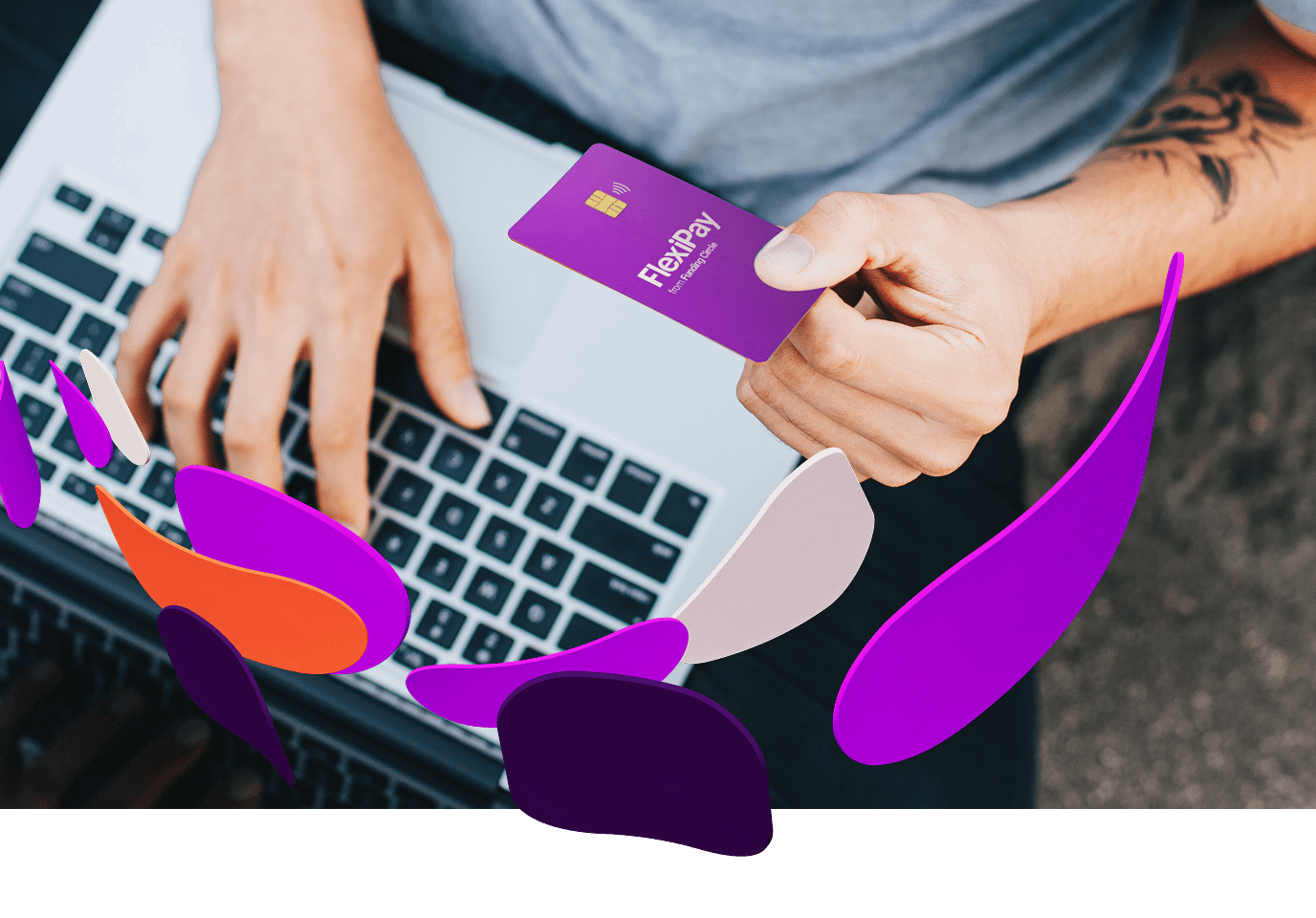
FlexiPay from Funding Circle is a cash flow companion, giving you credit you can flex around your business. You can pay suppliers and bills directly, use the card wherever Visa is accepted, or transfer money into your own business bank account.
For each payment, you choose to repay over 1, 3, 6, 9 or 12 months. There's no interest, just a flat fee per transaction starting at 1.99%, so you know the full cost before you commit.
Good for: planned or one-off costs you'd like to spread over a few months, such as stock, VAT bills, supplier invoices or equipment.
2. Business credit card
A business credit card gives you a credit limit for everyday spending, with a statement each month. If you clear the balance in full by the due date, you usually won't pay interest, thanks to a grace period. If you carry a balance, interest is charged on what's left.
Good for: regular day-to-day spending you can repay each month, such as fuel, travel, software and small supplier bills.
3. Revolving credit facility
A revolving credit facility (RCF) works much like an overdraft that sits outside your current account. You draw down funds up to a limit, repay them and draw again. Interest is charged on what you use, and there may be arrangement and non-utilisation fees. RCFs are more common for larger, established businesses. Our guide to overdrafts vs revolving credit facilities vs FlexiPay compares them.
Good for: larger businesses that need ongoing access to significant working capital.
4. Short-term business loan
A short-term business loan gives you a lump sum that you repay in fixed installments over a short period, often months rather than years. You know your repayments upfront, and the loan isn't linked to your bank account. It can bridge a specific gap, such as a seasonal dip or a large order.
Good for: a known, one-off funding need with a clear repayment plan.
5. Business loan
A business loan gives you a larger lump sum repaid in fixed monthly instalments over a longer term. It's less flexible than an overdraft for day-to-day dips, but more suitable for growth projects, such as hiring, new premises or marketing.
Good for: larger investments where you want predictable repayments over several years.
6. Invoice finance
If cash is tied up in unpaid customer invoices, invoice finance lets you borrow against them, usually releasing most of the invoice value upfront. Our guide to invoice factoring vs invoice discounting explains the two main types.
Good for: business-to-business companies with long payment terms and reliable customers.
7. Merchant cash advance
A merchant cash advance gives you a lump sum that you repay as a percentage of your future card sales. Repayments rise and fall with your takings. It can suit businesses with strong card sales, but it can be more expensive than other options once you work out the effective annual cost. Our guide to merchant cash advances explains how they work.
Good for: retailers, restaurants and others that take most payments by card.
8. Asset refinance
If your business owns valuable equipment, machinery or vehicles outright, asset refinance lets you borrow against them to release cash, repaying over a fixed term.
Good for: asset-rich businesses that need a cash injection without selling equipment they still use.
Business overdraft alternatives compared
| Option | How you repay | How costs work | Linked to your bank? |
|---|---|---|---|
| Business overdraft | No set schedule, usually repayable on demand | Variable daily interest on what you use, plus any fees | Yes |
| FlexiPay | Choose 1, 3, 6, 9 or 12 months per payment | Flat fee per transaction from 1.99%, no interest | No |
| Business credit card | Monthly statement | No interest if cleared in full by the due date, interest on balances carried over | No |
| Revolving credit facility | Draw and repay within the limit | Interest on what you use, plus fees | Usually no |
| Short-term business loan | Fixed instalments over months | Interest, fixed or variable | No |
| Business loan | Fixed monthly instalments over years | Interest, fixed or variable | No |
| Invoice finance | Repaid when customers pay | Service fee plus interest or discount charges | No |
| Merchant cash advance | A share of card sales | Fixed fee agreed upfront | No |
Costs vary between providers and customers, so compare the total cost of any option, including all fees, and do your own research before signing up.
Overdraft or FlexiPay: which suits your business?
FlexiPay and an overdraft can both help with cash flow, but they're designed for different jobs, and many businesses use both.
An overdraft may suit you better if:
you need a buffer for short, unpredictable dips, often lasting days rather than months
you want cover that kicks in automatically when your balance runs low
you'd expect to clear what you owe quickly, so daily interest stays small
FlexiPay may suit you better if:
you want to know the exact cost of borrowing before you spend
you'd like to spread a specific cost, such as stock or a tax bill, over several months
you want flexible funding without switching banks or relying on your bank's overdraft decision
you want to pay suppliers directly, use a card or move funds into your own account from one credit limit
you'd like a set repayment plan, so balances don't roll on indefinitely
Getting the most from FlexiPay
FlexiPay's flat fee makes costs easy to see, so it's worth thinking about how long you need to repay. A shorter plan means a lower fee.
For very short gaps that you'll clear in days, a low-rate overdraft may cost less. For costs you'd otherwise carry on an overdraft for several months, a fixed fee and a set end date can make planning simpler. The right answer depends on your circumstances, so compare the total cost of each option for the way you'll actually use it.
How to choose the right overdraft alternative
Ask yourself:
What's the money for? A one-off cost, a recurring bill, a growth project or a temporary dip each suit different products.
How long will you need it? Days, months or years makes a big difference to which option costs less.
How predictable is your income? Variable income may suit flexible repayments, while steady income may suit fixed instalments.
Do you want certainty or flexibility? Fixed fees and instalments give certainty, while overdrafts and credit lines give flexibility.
What's the total cost? Compare interest, fees and how each is charged, based on your expected use.
Our guide to business lines of credit and our wider guide on what finance is right for your business can help you narrow it down.
Making the most of flexible credit with Flexipay
Cash flow rarely runs to a neat schedule. FlexiPay gives you a flexible extension to your existing bank account, so you can pay when you need to and repay in a way that works for you.
Credit limits up to £250,000, available whenever you need them
No interest, just a flat fee from 1.99% per transaction
Choose to repay each payment over 1, 3, 6, 9 or 12 months
Pay suppliers, use your Visa card, or transfer funds into your business bank account, with a flat fee from 1.99%
Apply in about 4 minutes, with no documents needed and an instant decision
Funds can reach your bank account the same working day if you draw down before 2pm
Works alongside your existing bank account, so there's no need to switch
Check your FlexiPay credit limit
If you need a larger lump sum, a Funding Circle business loan lets you borrow up to £750,000 with fixed monthly repayments. For everyday spending, the Cashback business credit card earns 2% cashback for the first 6 months or up to £2,000, whichever comes first, then 1% uncapped, with up to 42 days interest-free as a grace period when you clear your balance in full each month.
To apply, your business needs to be a UK limited company or LLP with at least 1 year of trading
Overdraft alternative FAQs
Is FlexiPay the same as an overdraft?
No. An overdraft is part of your bank account and charges daily interest when your balance goes below zero. FlexiPay is a separate credit limit that sits alongside any business bank account. You choose how to repay each payment over 1 to 12 months, for a flat fee per transaction instead of interest.
Can I have an overdraft and FlexiPay at the same time?
Yes. Many businesses keep an overdraft as a buffer for short dips and use FlexiPay for planned costs they want to spread out. Using the two together can give you more control over how you manage cash flow.
What can I do if my bank reduces or withdraws my overdraft?
Look at what you were using the overdraft for. If it covered regular costs, a flexible credit line or business credit card may help. If it covered a larger, longer-term gap, a business loan may be a better fit. Talking to your bank about the reasons for the change can also help you plan.
Is an overdraft cheaper than other types of finance?
It depends on how you use it. For very short gaps cleared within days, an overdraft's daily interest can be low. If you stay overdrawn for months, interest and fees add up, and an option with a fixed cost and set repayment date may be easier to manage. Compare the total cost for the way you'll actually borrow.
Do I need to switch banks to get an overdraft alternative?
Not usually. Most alternatives, including FlexiPay, business credit cards and business loans, work alongside your existing business bank account.
Disclaimer
31/10/26 – While we want to help as much as we can, the information found here is provided solely for informational purposes and should not be considered financial or legal advice. To the extent permitted by law, Funding Circle does not accept any liability for any loss or damage which may arise directly or indirectly from the use of, or reliance on, the information contained here. If you have any questions, please speak to your professional adviser or seek independent legal advice.
Learn more about our business loans and business credit card products
